
ICU Blog and News
Texas SB 838: Your Classrooms Have Panic Buttons. Are They Connected?
Key takeaways
SB 838 requires silent panic alert technology in every classroom in Texas school districts and open-enrollment charter schools. The alert must allow immediate contact with emergency services, law enforcement, health departments and fire departments. Districts can pay for it from the school safety allotment (Education Code 48.115) or other funds. The law does not define the technology and sets no technical or testing standards. A connected system that reaches the whole building, shows location and supports the response after the first alert closes the gaps a stand-alone button leaves.What is Texas SB 838?
Texas Senate Bill 838 is Texas's Alyssa's Law. Since the 2025-2026 school year, it has required every school district and open-enrollment charter to "provide each classroom ... with silent panic alert technology." That technology must allow "immediate contact with district or school emergency services and emergency services agencies, law enforcement agencies, health departments, and fire departments." (TxSSC Law Toolkit)
How can Texas districts pay for SB 838 panic alert technology?
Districts may pay for silent panic alert technology from the school safety allotment (Education Code 48.115) or other funds, through their normal procurement process. Because that allotment also covers other safety needs, a system that does several jobs makes the money go further.What does SB 838 not require?
SB 838 sets the outcome, not the method.Does not define what counts as silent panic alert technology. Sets no technical or testing standards. Grants no new rulemaking authority. Does not replace the separate rule that staff have classroom access to a phone or other communication device (Education Code 37.108(a)(2)).
Where do stand-alone panic buttons leave gaps?
A stand-alone panic button can meet the letter of SB 838 and still leave a campus exposed.The gaps usually show up in five places:

The alert reaches responders, but not the building.
A call to dispatch is essential, and so are the front office, nearby campus leaders and the teacher who needs to lock the door right now. If the button and your paging live in different systems, someone still has to pick up a microphone.
Each tool is its own island.
Paging, bells, desk phones, desktop alerts, digital signs, cameras and the mobile app often come from different vendors with different screens. In an emergency, every extra screen is a delay.
Responders know something happened, but not where.
A button tied to a room helps. A teacher who has stepped into the hallway or the gym is harder to find.
The button covers the first minute and nothing after.
Lockdown, accountability, reunification and the all-clear happen in other tools, on paper or by phone tree.
It only does one job.
SB 838 money comes from the same safety allotment as everything else. A system that only answers this law competes with every other need instead of covering several.What does a connected panic alert system look like?
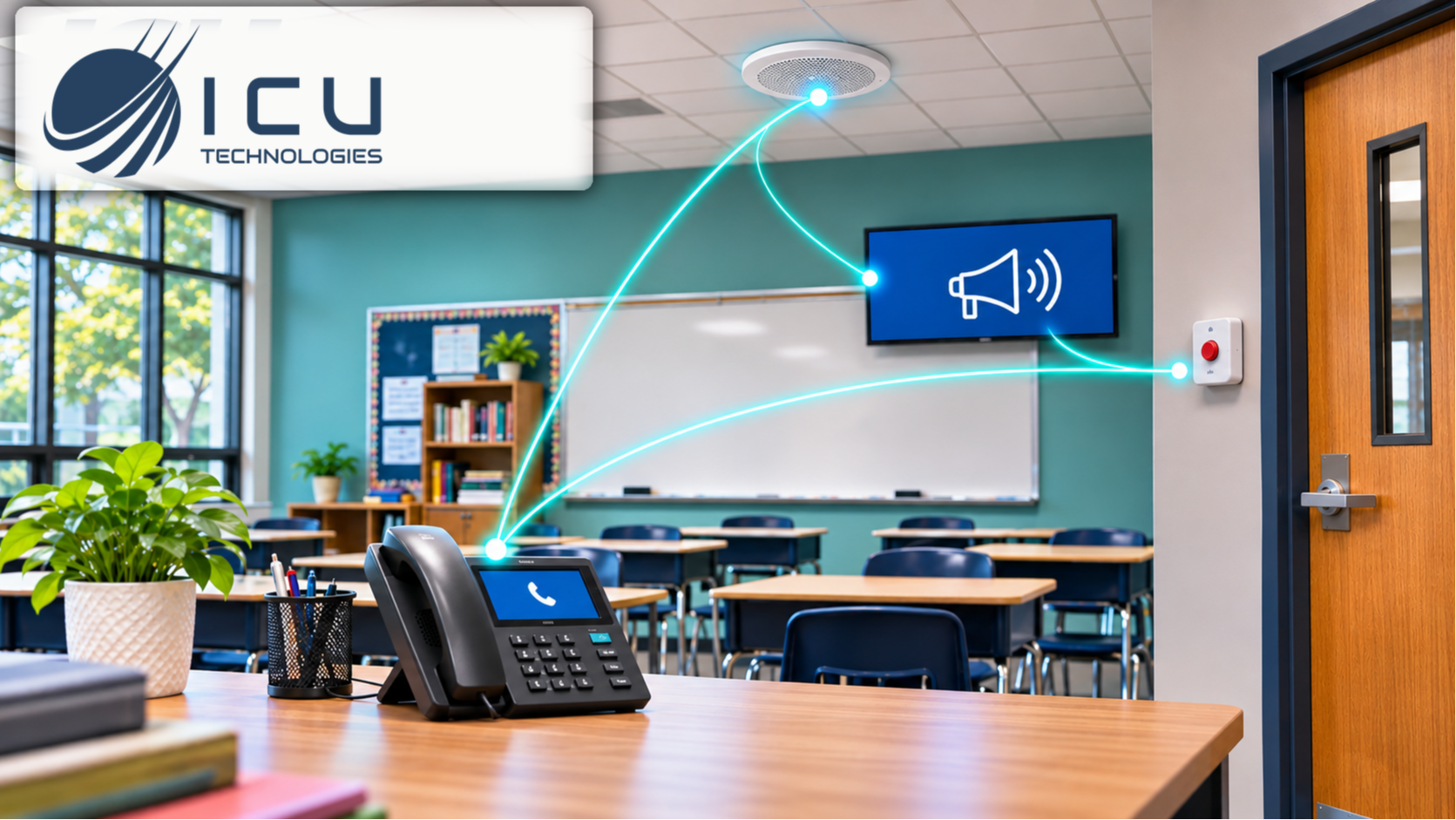
A connected panic alert system uses one trigger to reach every speaker, phone and screen, notifies the right people in the right order, shares the location of the person who raised the alert, and supports the steps that come next. The fix is not another device. It is connecting the devices a district already owns.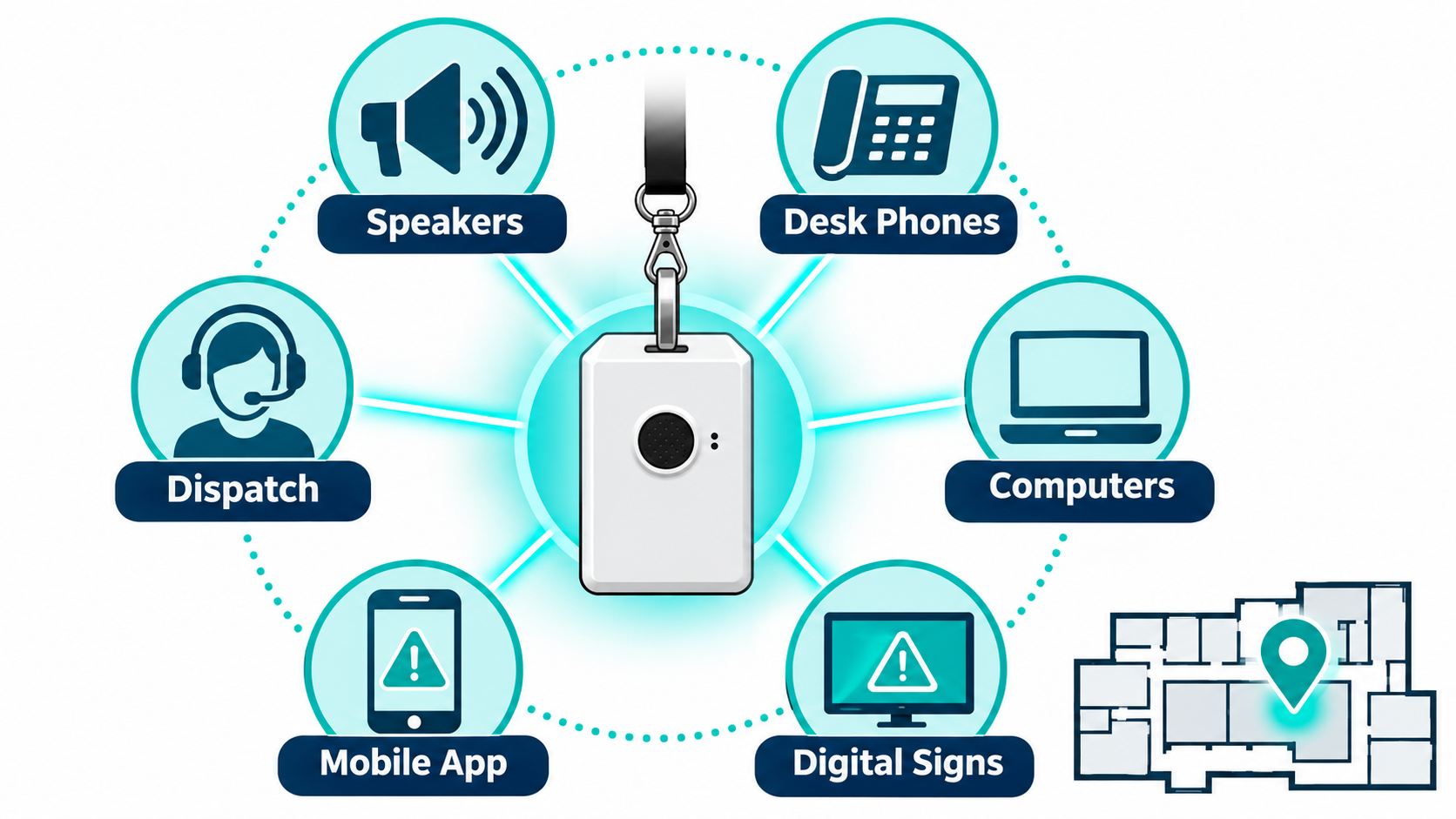
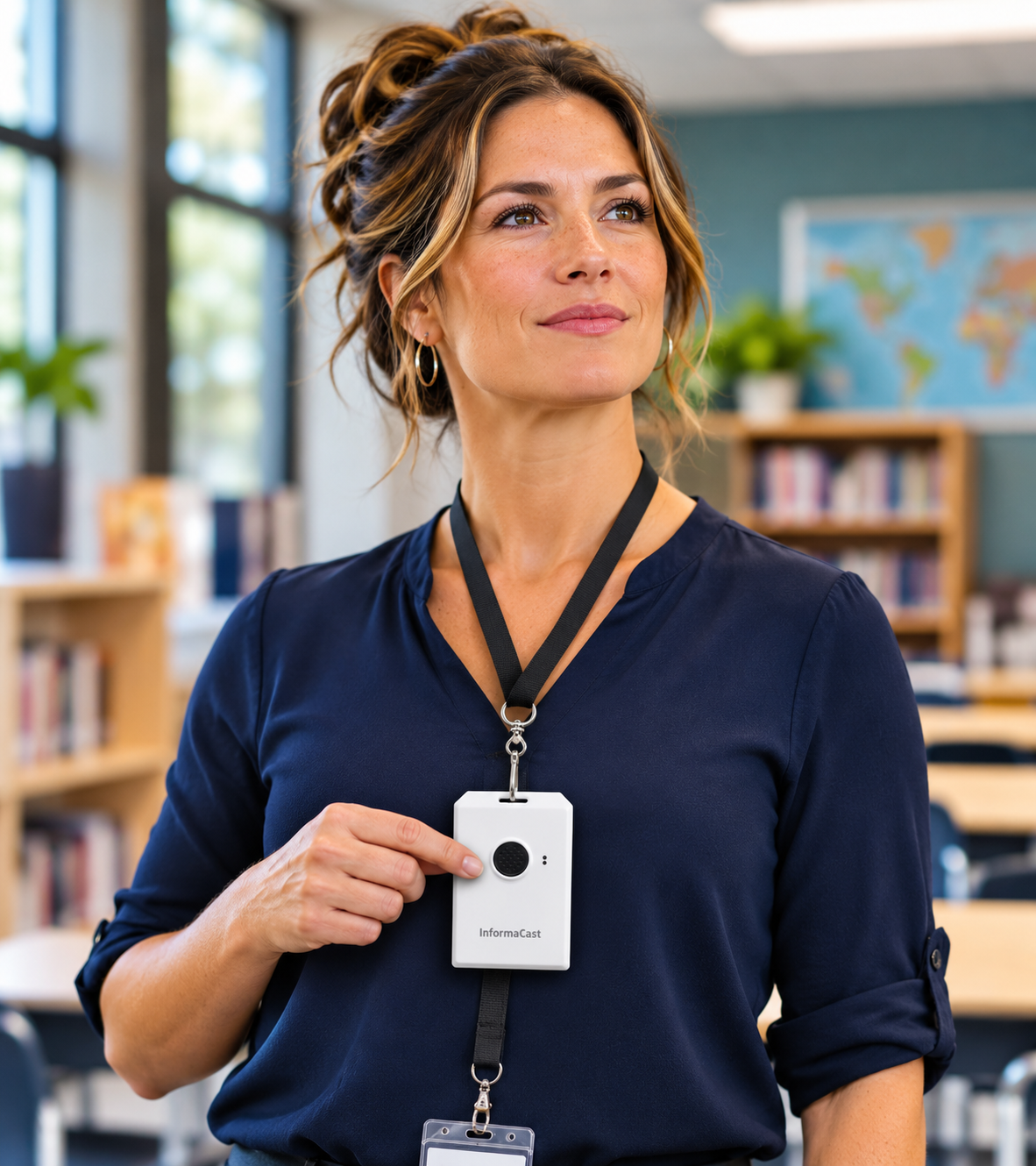
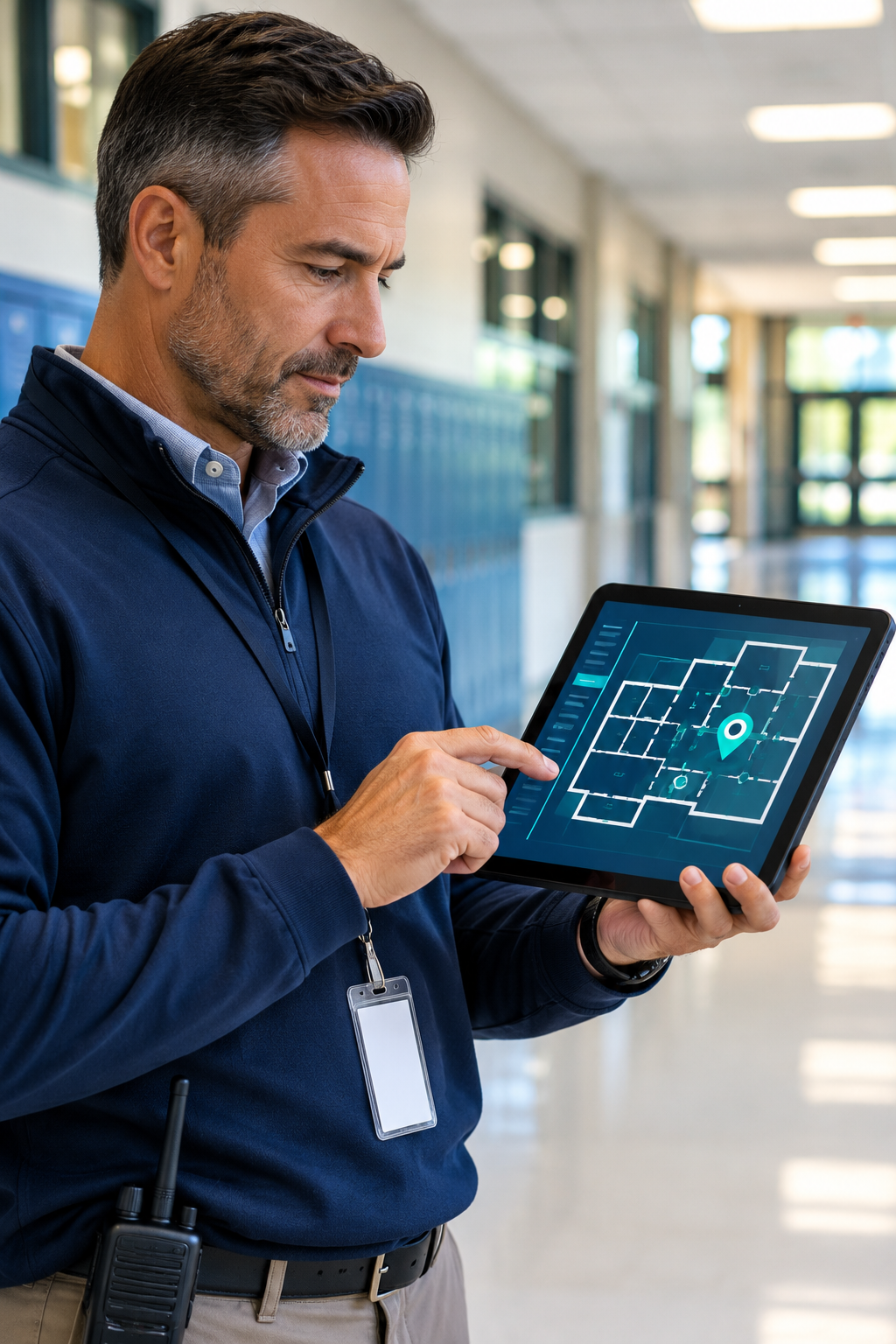
Connected platforms exist today. For example, Singlewire's InformaCast says a panic alert can launch from a desk phone soft key, a keyboard shortcut, a mounted button, the mobile app or a wearable badge, and reach "speakers, desk phones, computers, digital signage, and mobile devices," as well as local dispatchers. (Singlewire, Panic Buttons) Its wearable badge shows the wearer's location "on a map of your building," with floor- and room-level accuracy, and lets the safety team pull up nearby cameras from that map. (Singlewire, InformaCast Alert) The same platform covers 911 call awareness, bells and paging, and reunifying students with approved guardians after an event. (Singlewire, K-12 Education)
A system built this way meets SB 838 while also running daily bells and announcements, weather alerts, lockdown drills and reunification. One investment solves many problems.
How do you know if your panic alert system is connected?
Use these six questions to see whether your system is tied together or just installed:
When a teacher presses the button, who knows within seconds? Responders, yes. Do your front office, campus leadership and district safety team get the same alert at the same moment, without a phone call? Is every classroom really covered? Count portables, labs, gyms and shared spaces. Does each one have a silent way to raise an alert? Does it use what you already own? Does one alert reach your paging speakers, desk phones, computers and signs, or do those still need a second step by hand? Can staff trigger it without a phone in hand? If the phone is in a desk drawer, what happens? Does anyone know where the person who pressed it is standing? What happens after the first alert? Can the same system run the lockdown message, check who is safe, send the all-clear and support reunification? Can you test it and prove it? The law sets no testing rule, so set your own. Do you drill it, and do you have a record of each alert for your board and community? If you answered "no" or "not sure" more than once, your system likely meets the law but leaves gaps. Closing them usually starts with connecting what you already have.
Frequently asked questions about SB 838
Is SB 838 the same as Alyssa's Law? Yes. SB 838 is Texas's version of Alyssa's Law. It requires silent panic alert technology in every classroom.
Who has to comply with SB 838? Every Texas school district and open-enrollment charter school must provide silent panic alert technology in each classroom.
When did the SB 838 requirement take effect? The classroom requirement applies beginning with the 2025-2026 school year.
Does SB 838 require a specific product or vendor? No. The law does not define the technology and sets no technical standards. Districts choose a solution through their normal procurement process.
Does SB 838 require panic alert testing? No. SB 838 sets no testing standards, so districts should set their own drill schedule and keep a record of each alert.
Does a panic alert system replace classroom phones? No. SB 838 does not replace the separate rule that staff have classroom access to a phone or other communication device (Education Code 37.108(a)(2)).
How can districts pay for SB 838 compliance? Districts may use the school safety allotment (Education Code 48.115) or other funds.
The bottom line
SB 838 put a silent alert in every Texas classroom. The districts that get the most from it treat that alert as the front door to one connected emergency plan, not a stand-alone button.